
The issue has a AAA rating from India Ratings, the domestic services of Fitch, reflecting the unconditional guarantee extended by the government.

In August 2009, HDFC had issued warrants -- along with non-convertible debentures of Rs 10 lakh (Rs 1 million) each -- to qualified institutional buyers.

In a rising interest rate regime, fixed maturity plans can offer good returns. But exit in the interim is difficult because of listing.

Meanwhile in a separate notification, the RBI said that custodian banks could issue irrevocable payment commitments on behalf of FIIs to stock exchanges and clearing houses for purchase of shares under portfolio investment scheme.

Individuals likely to opt for safer bets like fixed income, PSU stocks and gold in the new year.

The airline had raised Rs 700 crore from the debt market through a non-convertible debenture issue and the same was up for interest payment or redemption on Thursday.
Announcing that the company had completed its fund raising for repayment of the bridge loan taken to acquire British marquee car brands Jaguar and Land Rover, Tata Motors said this was achieved by extending the final maturity of $1 billion by 18 months up to December 31, 2010.
Investment banking experts and capital market advisors, who are engaged in talks with companies that are looking at fund-raising options, said that while 13 large-cap companies were looking at raising capital to the tune of Rs 30,000 crore through QIPs, rights issues and NCDs, 20 other companies had initiated talks to raise about Rs 15,000-20,000 crore. At least 10 NCD issuances are expected during the first half to raise a total of Rs 10,000-15,000 crore.
Many have downgraded EPS estimates for the Sensex in FY12.
Pantaloon Retail Ltd, the country's largest retail company, and Future Value Retail Ltd, recently carved out from Pantaloon as a 100 per cent subsidiary, plan to issue non-convertible debentures worth Rs 750 crore in the next three-four months, according to sources.

NCDs are unsecured loans to a firm with no provisions to exchange debt for corporate stock.
Life Insurance Corporation of India intends to pump in around Rs 1,05,000 crore into non-convertible debentures and equity in the current financial year, nearly 20 per cent more than the Rs 88,000 crore it invested in these instruments in 2008-09.
Tata Steel, the world's sixth largest steel-maker, will raise Rs 3,000 crore through non-convertible debentures to prepay the debt of its UK subsidiary, Tata Steel UK. The issue is Rs 1,000 crore higher than originally planned.
Investing in debt instruments requires careful attention.
HDFC, the country's largest housing finance company, is planning to raise up to Rs 1,000 crore (Rs 10 billion) through non-convertible debentures with a green-shoe option next week. Sources close to the development said the company would issue NCDs worth Rs 200 crore (Rs 2 billion), while keeping an option to raise another Rs 800 crore (Rs 8 billion) through the green-shoe option.

"This is historic that our maiden issue of Rs 250 crore NCD is fully subscribed within 3 minutes of opening of the issue... This shows the excitement and faith of investors, said Patanjali Ayurved Managing Director Acharya Balkrishna.
The Central Bureau of Investigation has filed chargesheet against the chairman of Usha Group of Industries Vinay Rai, his brother and chief general manager of the company Anil Rai.

A bankruptcy appeals court has scrapped billionaire Anil Agarwal-led Twin Star Technologies' winning bid to take over Videocon Industries Ltd on a plea by some creditors that the money offered imposed a steep Rs 62,000 crore haircut upon banks. The National Company Law Appellate Tribunal (NCLAT) asked creditors to initiate the fresh sale of Videocon, a consumer durables company manufacturing products ranging from air-conditioners to washing machines, for recovery of their unpaid Rs 64,637.6 crore. While a majority of lenders had previously accepted Twin Star Technologies' Rs 2,962.02 crore offer, Bank of Maharashtra (BoM) and IFCI Ltd dissented, saying the amount offered was close to the liquidation value of the bankrupt firm and that they cannot be paid less than the liquidation value.
It alloted 6000 non-convertible debentures of face value of Rs 10 lakh
The Credit Rating Information Services of India Ltd (Crisil) has reaffirmed its ratings of three different fund raising programmes of Tata Iron and Steel Company Ltd (Tisco).
Similarly, the state-owned corporation has subscribed to NCDs worth around Rs 20,000 crore (Rs 200 billion) this year, with nearly Rs 12,000 crore (Rs 120 billion) flowing into these instruments over the last three months when the global credit crisis intensified.
KPL International Ltd has fixed February 15, 2003 as the record date for the purpose of Scheme of arrangement between the Company and equity shareholders of the Company.\n\n\n\n

Compare the post tax returns and tenure of debt instruments before investing.

Mauritius-based Hinduja group firm IndusInd International Holdings (IIHL) has informed the administrator of Reliance Capital that it is ready with its equity contribution of Rs 2,750 crore in cash to acquire the bankrupt firm, but it wants certain conditions to be met in accordance with the resolution plan before transferring the amount. IIHL has also filed an application with the Mumbai Bench of the National Company Law Tribunal (NCLT), seeking directions for the administrator and the committee of creditors (CoC) to complete all pending activities to close the transaction and not let the lenders invoke the bank guarantees provided by the firm earlier.

Banks are preferring instruments with higher premium over government securities for their held-till-maturity (HTM) portfolio, following the new investment norms, which came into effect from April 1. They are stocking up on corporate bonds and state government securities to boost yield on their portfolio, according to market participants. "Definitely, if there is a good spread available and without lower credit risk, those instruments will be favoured to boost the yield on the portfolio.

PSB executives said loans to group holding company IL&FS and entities might still be treated as "standard".

JM Financial on Wednesday said it had a "careful and detailed review" of the Reserve Bank's order imposing restrictions on the company's financing business and asserted that there was "no material deficiencies" in its loan sanctioning process. The Reserve Bank on Tuesday imposed restrictions on JM Financial Products Ltd after it found the company indulged in various manipulations, including repeatedly helping a group of its customers to bid for various IPOs (initial public offerings) by using loaned funds. "After careful and detailed review of the order issued by the RBI on the action against JM Financial Products Ltd, we strongly believe that there have been no material deficiencies in our loan sanctioning process.

The company will offer a total of up to 15,06,44,759 ordinary shares
Schemes among the six wound up by the fund house had given a loan of Rs 518 crore against non-convertible debentures to the firm in March 2019, according to ED's chargesheet.

The development comes after Sebi received representations from listed entities, chartered accountant firms, and industry bodies, seeking further extension of time for filing of financial results for the quarter/half year/financial year ended March 31, 2020.
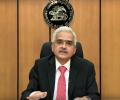
The RBI on Friday said it will give banks Rs 1 trillion through targeted long-term repo operations (TLTROs), of up to three-year maturity, to deploy in "investment-grade corporate bonds, commercial paper, and non-convertible debentures over and above the outstanding level of their investments in these bonds as of March 27, 2020."

In three separate but similarly-worded orders, Sebi said the default by IL&FS occurred due to "lethargic indifference and needless procrastination and laxity" of the rating agencies.

Most companies do not provide correct and complete information to the Registrar of Companies (ROC) and Sebi.

The Reserve Bank of India (RBI) will meet top executives of asset reconstruction companies (ARCs) on Friday to take stock of the sector. During the meeting, ARCs will also seek clarity from the regulator on bank borrowing. While there is no regulatory ban in place, ARC sources said banks often refuse funding.

Co-lending deals between non-banking financial companies (NBFCs) and banks are likely to rise after the Reserve Bank of India's (RBI's) decision to increase the risk weight on consumer credit, industry leaders and experts say. Smaller NBFCs, they add, may increasingly opt for co-lending as capital markets could become costlier for them. "Smaller NBFCs will be more comfortable with co-lending because they are geography-specific in terms of industry or customers.

Tata Sons Private Limited, the holding company of the Tata group, witnessed a precipitous drop in its net debt to Rs 5,656 crore in the 10 months ended January this year, as its cash reserves burgeoned to Rs 9,516 crore during this period. Eight years ago, in 2015-16, Tata Sons reported a net debt of Rs 5,132 crore; from March 2017 until March 2023, this figure was above the Rs 14,700 mark, peaking at Rs 27,437 crore at the end of March 2019, according to data sourced from Capitaline. The company's gross debt nearly halved to Rs 15,173 crore until January 2024 on a standalone basis, down from a peak of Rs 31,363 crore reported in the financial year ended March 2019.

The trends remained sluggish in the primary stock market
